What Is Sámi Culture Like Around Tromsø?
Sámi terms, who's actually Sámi-owned among these operators, and what a culture camp involves, without Lapland mix-ups or costume talk.
Sámi culture in and around Tromsø isn’t a backdrop to the reindeer; it’s the reason the tours exist at all. Reindeer husbandry inside Norway’s Sámi reindeer-herding areas is, by law, a right held by Sámi families, organized into named herding districts that have existed in some form for well over a century. The Troms reindeer grazing area, which takes in Tromsø, is one of six such regions. On the two Sámi-owned operators’ tours, what a visitor meets is a working version of that: a family explaining its own herd, food and stories. The other camps vary, from a small herd at a multi-activity wilderness camp to a station-by-station visit, so read each listing for what it offers.
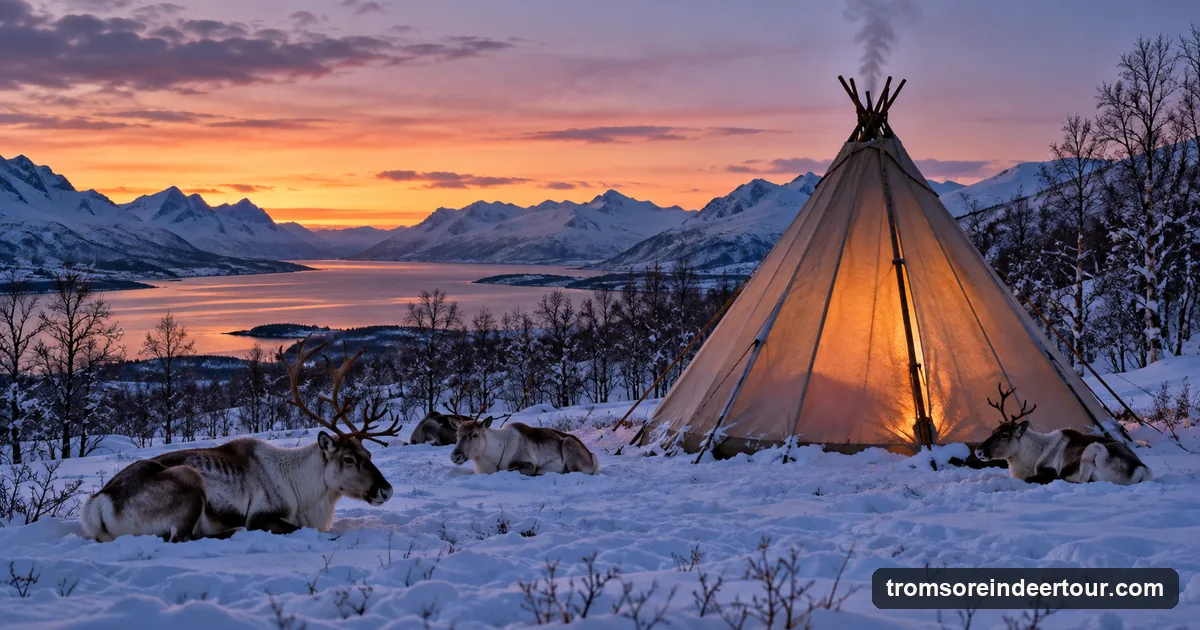
The tour pinned on this page is Tromsø Arctic Reindeer’s Reindeer Camp and Sami Cultural Tour with Lunch: feeding the herd, a hot meal at the camp and stories by the fire, with no sled ride, rated 4.7 from 3,813 reviews, from about $176 when we checked.
The words worth knowing
Sápmi is the Sámi people’s own name for their homeland, stretching across northern Norway, Sweden, Finland and Russia’s Kola Peninsula, a bigger and older idea than any single country’s borders. A lávvu is the portable, pole-framed tent most of these camps gather guests inside; a few listings use gamme instead, a different, more solid turf-or-wood hut traditionally built for longer stays rather than following a moving herd. The two words aren’t interchangeable, even though some tour descriptions use them loosely. Joik is a traditional vocal style tied to a specific person, animal or place, usually performed rather than explained. Gákti is traditional clothing, not a costume; its patterns can identify a wearer’s family or home region, and it’s worn for occasions that matter. Bidos, the stew served hot at several of these camps, is described by the operators themselves as a dish for proper occasions, weddings and celebrations, not an everyday meal, and five of the eleven listings here name it as their hot meal. Reviewers describe it without complaint; vegetarian versions are offered almost everywhere it’s served.
Who’s actually Sámi-owned, and who isn’t
Two of the five operators behind these eleven tours say plainly, on their own sites, that the business itself is Sámi-owned and founded by a Sámi family: Tromsø Arctic Reindeer, and Tromsø Lapland, started in 2009 by a member of one of the last northern-Sámi communities in Norway. The tour pinned on this page is one of Tromsø Arctic Reindeer’s own listings, which describes its ranch as “owned by the Sami people” in its own words.
The other three operators covered on this site describe Sámi guides and Sámi cultural content in their own listings, but none states that the company itself is Sámi-owned. That’s a real, worth-knowing difference, not a technicality: a Sámi-led cultural program and a Sámi-owned business are both genuine, honest claims, just not the same claim, and this page only makes the stronger one where an operator has made it first.
One company’s name, not a place
One of the five operators trades under the name “Tromsø Lapland.” That’s a business name, not a geography lesson. Tromsø sits in Troms county, part of the Sámi homeland of Sápmi, and not in the Swedish province of Lappland or Finland’s Lapland region. The company is Sámi-owned and the word is part of its brand, but booking a tour here doesn’t put you in Lapland, whatever the name on a listing suggests.
Older English words for the Sámi people themselves, not the place name, are now considered outdated or offensive by many Sámi people. Sámi and Sápmi are the words this page uses throughout, and the better choice generally.
What this specific tour includes
The tour pinned on this page runs as a lunch trip, not an evening one: transport from central Tromsø, hand-feeding a herd of around 300 reindeer, a hot meal and hot drinks inside the camp’s shelter, and storytelling around the fire. There’s no sled on this listing, so there’s no snow gamble to plan around. It meets at the Tromsø Havn Prostneset bus terminal, and reviewers call the culture portion the highlight more often than the food; one wanted a bigger lunch serving, but most don’t mention the size at all.
For the sledding question this tour deliberately skips, see reindeer sledding in Tromsø; for the welfare question some visitors ask before any of these, see is it worth it. Every operator mentioned here is compared on the homepage.
Sámi terminology from Wikipedia and published Sámi-authored sources; ownership claims from each operator’s own website; tour details from the listing’s own data. Checked October 2026.

Book the Reindeer Camp and Sami Cultural Tour
Tromsø Arctic Reindeer's feeding and culture day: hand-feed the herd, warm up in a lávvu with a hot lunch, and hear Sámi stories and a joik around the fire. No sled, so no snow risk. Rated 4.7 from 3,813 reviews, from about $176 when we checked.
Check Availability & Book